Farm Gates, Not Tailgates: Why British Country Songs Should Sound Like Britain
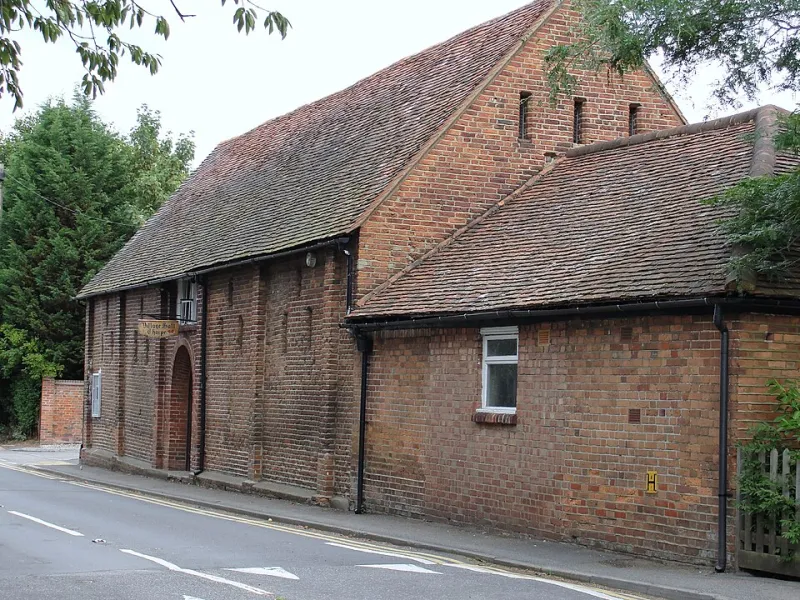
Photo: John M, CC BY-SA 2.0, via Wikimedia Commons
A few years ago I sat in the back room of a pub in South Yorkshire and watched a very good songwriter open with a line about a dirt road. The capo was on three, the chorus was lovely, the room was on side. Then the bloke next to me leaned over and whispered: "Which dirt road, though?"
It's not that he was being unkind. It's that there genuinely isn't a dirt road for about eleven miles, and we both knew exactly where the tarmac started. That whisper has been rattling around my head ever since.
The Borrowed Scenery Problem
British country and Americana has never been healthier — more festivals, more young players, more folk in their forties discovering a pedal steel for the first time. But a good chunk of the songwriting is still furnished from a catalogue: tailgates, dirt roads, jacked-up trucks, county lines, sweet tea, a porch. It's the musical equivalent of hanging a cowboy hat on a coat hook in a semi-detached in Crewe.
None of those things are bad. They're just not ours. A county line in Wiltshire is a sign that says Please drive carefully in white paint with a bit chipped off. A tailgate is the boot of a Fiesta with a wet picnic blanket in it. And nobody is drinking sweet tea in a lay-by on the A46 in November unless something has gone badly wrong.
What We Actually Drive to Gigs In
Here's the thing that makes me laugh: British country songs are often written as if the road is wide, straight and empty. Our roads are none of those things. Our roads are a farm gate that has to be lifted and dragged across the gravel. A cattle grid that makes the snare drum rattle. A hedge bank high enough that you can't see the view until you get to the top of the hill, at which point it's worth it.
And the vehicles. Honest to goodness, a Land Rover Defender with a heater that has exactly two settings — off, and vaguely warm — is a far richer image than a truck that no one at the gig has ever sat in. A Morrisons car park at dusk, with a band loading a bass cab into an estate car while somebody's nan waits patiently in the passenger seat, is a scene worth a whole chorus. It's not glamorous. It's specific. Specific is what makes people cry.
The Writers Already Doing It
This isn't a lecture, because the best of the scene are already there.
The Shires made a whole album title out of missing British weather — Nashville Grey Skies — and it remains one of the smartest pieces of place-writing to come out of a British country record. Ward Thomas grew up in Hampshire and write like it. Yola took Cambridge to Nashville and refused to sand herself down. Elles Bailey writes from Bristol with the grit of a thousand late-night drives. Twinnie brings a Yorkshire directness to a Nashville songwriting room. Ferris & Sylvester keep one foot in London and one in the mud.
Not one of them needed a dirt road. Every one of them kept the harmony stacks, the choruses that lift, the pedal steel. That's the balance.
A Working Vocabulary
If you're sitting down to write this week and you want the song to sound like home, try starting from this list instead:
- the farm gate, the cattle grid, the stile at the end of the footpath
- the lay-by, the A-road, the roundabout where the gig is signposted wrong
- the village hall with the bad lighting and the good acoustics
- the Spar, the ginnel, the dyke, the grain store, the phone signal that dies at the second bend
- the flask, the two-hour drive, the coat you keep in the car all year
- the 6.40 to Leeds and the person who takes it because the shift starts at eight
You don't have to use all of them. Use two and mean them.
The Obvious Objection
Someone always says: but we love Nashville. Good. So do I. Country music is a borrowed language and always has been — the banjo came from West Africa via Appalachia, the pedal steel came out of Hawaiian guitar, and everyone in the chain was pinching from someone. There's no purity test here.
And borrowing form is not the problem. Borrowing the furniture is. A three-chord chorus that lifts into a harmony is a gift. A line about a dirt road you've never driven is just a costume.
Rain Isn't a Weakness
There's a school of thought that British songs need to be grey and apologetic to be authentic. Rubbish. The reason rain works as a lyric isn't misery — it's contrast. A wet coat hung on the back of a door. Wellies kicked off in a porch that's really just a small square of lino. The pub at the end of it, warm and loud and full of people who all drove the same forty minutes to be there.
That's not a smaller story than Nashville's. It's the same story in different footwear.
Starting Point for Monday
Don't ban the truck. Just make it earn its place. Ask yourself: could this line be sung by someone who has actually stood where I'm standing? If the answer's no, put the pen down and go and look out of the window for a minute. There's usually a farm gate. There's usually a really good song attached to it.
And if all else fails, write about the drive home. We've all done that one.