The Guard's Whistle Is the Real Encore: Last Trains and the Shape of a UK Country Night
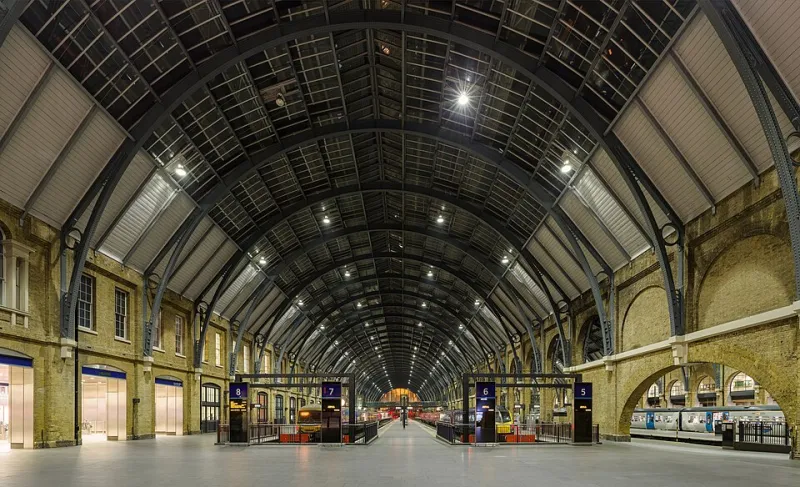
Photo: Diliff, CC BY-SA 3.0, via Wikimedia Commons
There is a moment, somewhere around twenty past ten on a Saturday night, when a country gig in Britain quietly changes key. The band is mid-song. The room is warm. And then four or five people near the back start doing sums — eleven minutes to the station, four minutes to the platform, and the last train does not care about the third verse.
You can feel it ripple. A couple start gathering coats without taking their eyes off the stage. Someone by the merch table mouths what time is it at a friend. And the band, if they've been doing this for more than a season, clock it too. That's when the plan for the last twenty minutes gets quietly rewritten.
The Encore Nobody Can Afford
Ask anyone who promotes country and Americana nights in Britain and they'll tell you the same thing: the setlist isn't really decided in the dressing room. It's decided at the ticket desk and on the National Rail app.
"You can plan a beautiful two-song encore and then watch half the room leave before the first chord of it," says a promoter who runs a 180-capacity room a short walk from a West Yorkshire station. "It's not rudeness. It's a nine-minute walk and one train an hour. If they miss it, they're not going home. So they go at ten to eleven, and they go sad about it."
The result is that the encore has become less of a given and more of a negotiation — with the timetable sitting at the table like a very punctual, very unromantic guest.
What Gets Cut, and What Gets Kept
Artists describe the trimming in surprisingly practical terms. The slow, sprawling album track that would be gorgeous at a festival gets quietly benched. The big finish moves forward so the final song is the final song, not the one before the coat rush. And the thank-yous get shorter.
A singer-songwriter from the north-east puts it like this: "I used to close with the quiet one, because it felt honest. Now I close with the loud one, and I play the quiet one at nine o'clock when everyone's still holding their pint. Same set. Different order. The room sounds better, actually — nobody's half out the door for the best bit."
There's a craft to it. Rather than losing a song, good acts restructure the night so the emotional peak lands at 10:35 instead of 10:55. It is, in its own way, a form of respect: the audience came out, spent money, stood in a cold queue for the cloakroom — the least a band can do is not strand them in a car park in Leeds at midnight.
Picking a Room by the Rails
This is why the geography of the UK country circuit looks the way it does. Promoters gravitate toward rooms within a ten-minute walk of a station — not just for convenience, but because a good train link effectively enlarges the venue. A 200-cap room outside a city centre with no late bus might behave like a 90-cap room in practice, because half the audience can't get there or can't get back.
The difference between a town with an hourly service and a town with two evening trains is enormous. One supports a proper headline show; the other supports a Sunday afternoon matinee and a very loyal, very local crowd. Both are lovely. They're just different gigs.
And it's reciprocal. Some promoters now print the last train time on the poster, right next to the doors time. Not as a warning — as information, like a weather forecast. It says: we know you've got a life to get back to, and we've thought about it.
The Merch Rush Before the Platform Announcement
There's a ten-minute window at the end of a British country night that regular gig-goers will recognise immediately. The band has come off. The house lights are up but not quite all the way up. And there is a small, polite stampede toward the merch table.
It's not the relaxed browsing you get at a festival. It's a raid. Card out, record chosen, can you sign it, sorry, my train — and the artist, pen in hand, doing their best to be gracious at speed. Everyone apologises. Nobody minds. The queue shuffles, the takings go up, and someone's vinyl goes into a tote bag for the walk.
"You learn to have the bags ready and the pen out before the last song," says one singer who tours the small-room circuit. "By the time I'm off stage I've got about six minutes of proper shopping."
The Walk to the Platform
The strangest thing about a transport-curfewed gig is that it gives the audience a second act. The walk to the station becomes its own little gathering — thirty people in coats, half of them still humming, all of them going the same way. Somebody's got a bottle of water. Somebody's got a question about the second song. The band's support act gets stopped twice for a photo.
It's a bit of community that no venue can manufacture. The room ends at eleven; the night ends at the platform, in a huddle under a lamp, comparing notes and checking the departure board.
And there's something quite fitting about it. Country music has always been music about going somewhere and coming back. There's the drive, the long road, the getting home. In Britain, that long road is often a two-carriage train and a bus replacement service, and it still counts.
A Kinder Curfew
The last train isn't the enemy of the UK country night. It's a collaborator, a slightly grumpy one, and the best promoters and artists have worked out how to work with it — earlier doors, tighter sets, matinees that finish in daylight, station-friendly venues, and a merch table that opens before the last chorus.
So next time the encore feels short, listen for the guard's whistle. It's not cutting the night off. It's telling you when everyone gets to go home together.