The Five-Minute Handover: What a Back-Room Open Mic Teaches British Country Acts
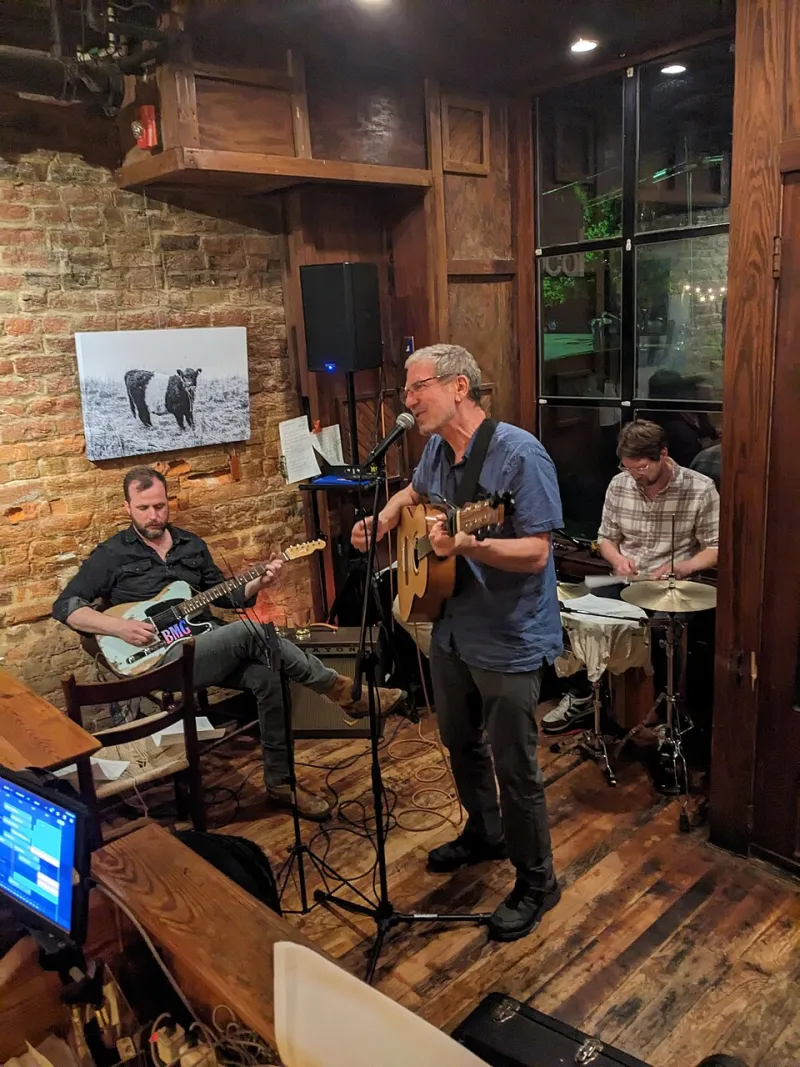
Photo: Artaxerxes, CC BY-SA 4.0, via Wikimedia Commons
On a Thursday in November, the back room of a pub in Sheffield holds twelve people, one borrowed amp and a sign-up sheet that has been folded and unfolded so many times it feels like cloth. The first act is a woman in her fifties with a Gibson copy and a capo she has to borrow. She plays three songs. The room listens. Then she hands the guitar lead to the next name on the list, and the night carries on.
This is the UK Americana open mic: not a showcase, not a scouting mission, but a small, stubborn economy of favours. You borrow an amp. You lend a lead. You swap a slot because someone’s train is late. You play five minutes, maybe three songs, and you learn exactly what a room of twelve people can tell you about your own songs.
The sign-up sheet is the whole economy
“You can tell a lot about a scene by what’s in the lost-property box,” says Ruth, who runs a monthly night in a Sheffield pub back room. “We’ve got three capos, a tuner, two leads and a mandolin nobody has claimed since February. People borrow gear, return it, and usually leave something behind. It’s a bit like a library, except the books are cables and the fines are paid in biscuits.”
The unwritten rules are simple. Ask before you unplug anything. Put the amp back where you found it. If someone lends you a guitar, check the tuning before you hand it back. If you borrow a slot, offer to swap next time. The open mic does not run on a budget so much as a balance sheet of small debts and repaid favours.
“I turned up with nothing but a plectrum the first time,” says Dan, a regular at a church-hall night in Bristol. “I borrowed a guitar, a lead and a stool. I felt like I’d been lent a whole band. Now I keep a spare lead in my bag, because somebody did that for me.”
Five minutes is plenty of rope
A five-minute set is not a limitation. It is a form of honesty. You cannot hide behind a long intro, a moody instrumental or a story that never quite lands. You have three songs, or two if one of them is long, and a room that has heard everything from bluegrass to bloody-minded ballads. The short set strips a song back to whether it works.
“You learn more from twelve people than twelve hundred,” says Mags, who has been running an open mic in a Manchester pub for six years. “Twelve people will tell you the truth. They’ll look at their phones, or they won’t. They’ll sing along, or they won’t. You can’t fake that.”
The first-timers are easy to spot: they hold the mic too close, apologise before they start, and look surprised when the room claps. The regulars are easy to spot too: they bring their own tuner, they know which socket works, and they have a song that is exactly four minutes long because they have learned how to leave the room wanting one more.
Twelve people can be a scene
A back room with twelve people does not look like a scene from the outside. But a scene is not a crowd. It is a set of relationships. The organiser who remembers your name. The regular who lends you a capo. The first-timer who comes back three months later with their own songs and a spare lead.
“We ask for a fiver on the door, but nobody is turned away,” says Ruth. “The fiver buys the biscuits and the heating. The rest is just people turning up for each other.”
In a church hall in Bristol, the heating is on a timer and the tea is in a big urn. In a pub in Sheffield, the room smells of beer and old carpet. In a village hall in Norfolk, the stage is a strip of floor between two stacks of chairs. They are different rooms with the same rule: listen, clap, and do not talk through the quiet bits.
The favour owed
The open mic is not a career ladder. It is a handover. You take the amp, you play your songs, you hand the amp to the next person. You owe a favour. You repay it. The cycle continues.
“I’ve seen people go from open mics to proper tours,” says Mags. “But that’s not why we do it. We do it because a room of twelve people can become a scene if you keep showing up. And because there is something honest about a five-minute set in a back room on a wet Thursday.”
So this winter, if you have three songs and a borrowed amp, find a sign-up sheet. Put your name down. Play your five minutes. Hand the lead to the next person. And when someone borrows your capo, let them. The favour will come back around.