Battered Cases, Better Stories: The Second-Hand Heart of British Country Tone
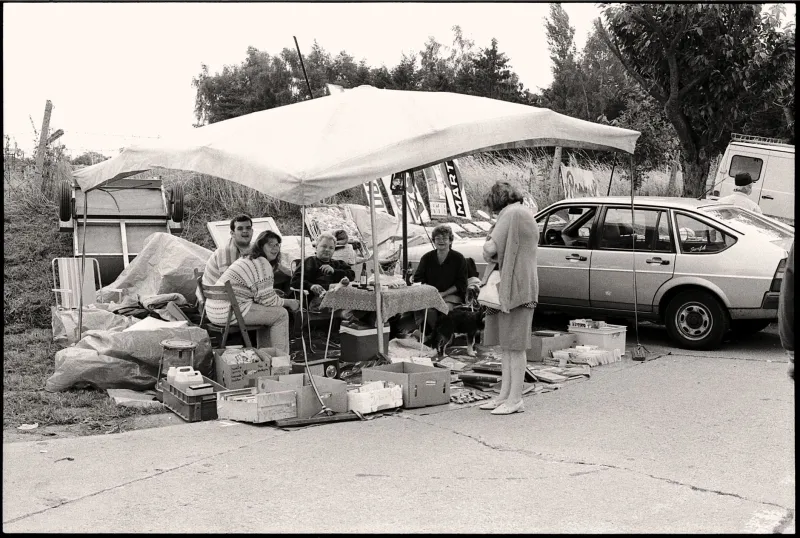
At 6.45 on a Sunday morning, a field just outside Norwich is already full of headlights and thermos steam. Somewhere between a stall selling mismatched crockery and a man with a table of VHS tapes, a country guitarist is crouched over an amplifier that looks like it has been through a divorce. She is not haggling for a collector's piece. She is looking for something that will get her through a village hall gig on Saturday and still leave enough change for a bacon roll.
That scene is not a novelty. It is the quiet economy of the UK country and Americana scene. While the glossy end of the market sells boutique pedals and relic'd guitars, plenty of working players are building their tone from car-boot finds, charity-shop amps, borrowed stompboxes and the careful work of local repairers. The result is not a compromise. It is a sound with history in it.
The 7am Economy of a Country Rig
Martha Bell, a Norwich-based Americana songwriter, still gigs with an £18 Carlsbro amp she found at a house clearance four summers ago. It has a replacement handle, a slightly scratchy volume pot and a speaker that smells faintly of old carpet. She would not trade it.
'It makes my Tele sound like it is telling a story rather than reciting a spec sheet,' she says. 'I have been offered newer amps. I have played newer amps. But this one has a thing that happens when you dig in, a little grit around the notes. And because it cost less than a tank of fuel, I am not precious with it. I take it to the pub. I take it to the barn. It does the job.'
That attitude runs through the scene. Tom Ridley, guitarist with Leeds country-soul outfit The Long Way Home, has a Boss DD-3 delay he bought for £35 from a bloke in a car park. The battery compartment is held shut with gaffer tape. It has been on every recording the band has made.
'You can spend months reading about tone,' he says. 'Or you can find a pedal that has been gigged to death, learn where it sounds good, and get on with writing songs. Mine is not vintage. It is not rare. It is just mine.'
Chopping Boards, Borrowed Pedals and the Art of Making Do
Priya Shah, fiddle player and singer in Bristol's Cedar & Ash, has a pedalboard made from a chopping board she bought in a Bedminster charity shop for £3. There is a tomato stain on one corner that she refuses to sand off. Her volume pedal was rewired by a volunteer at a Repair Café after the jack gave up mid-tour.
'I think there is a false idea that you need a perfect rig to be taken seriously,' she says. 'Most of us are borrowing something from someone. Most of us have a cable that only works if you fold it a certain way. The audience does not care about the board. They care about whether the song lands.'
That is not to say second-hand gear is automatically charming. A bad amp is a bad amp. A guitar with a twisted neck is not a personality trait. But the players who rely on older equipment tend to develop a different relationship with it. They learn which knob to avoid. They know the exact angle at which the input jack behaves. They carry a spare valve the way other people carry a spare phone charger.
The Repair-Shop Heroes Keeping the Show on the Road
Behind every scuffed rig is usually a technician who knows what they are doing. In Sheffield, Janet Hargreaves runs a small workshop above a bicycle repair shop. She services valve amps, re-solders jacks and tells customers honestly when a repair is not worth the money.
'A good tech does not try to make an old amp new,' she says. 'They make it reliable. There is a difference. You want it to keep its character, but you also want it to be safe and to turn on every time. That is the job.'
She has seen a rise in younger players bringing in car-boot finds. Some need a £6 re-solder. Some need a full service. Either way, she says, the conversation is usually the same: 'Can I gig this?' Not 'Can I sell this?'
Repair Cafés have become part of that story too. In church halls and community centres across the UK, volunteers are fixing loose jacks, replacing frayed cables and rescuing pedals that might otherwise go in the bin. For a new player on a tight budget, a Repair Café can be the difference between a broken bargain and a working rig.
Why a Battered Rig Can Help the Song
There is a practical argument here, and a romantic one. The practical argument is obvious: good second-hand gear is cheaper, and cheaper gear means more gigs, more recordings and less fear. The romantic argument is that country music has always been music of use. It belongs in rooms where things get spilled. It sounds good when the equipment has been somewhere.
'A scuffed guitar does not make you write better songs,' says Ridley. 'But it does make you less afraid to play them. You are not worried about the first scratch. It already has one.'
That matters in a scene built on village halls, pub back rooms and festival tents. The perfect rig can become a barrier. The battered rig invites you in.
The Buyer's Guide: Boot-Sale Country Tone Without the Bust
If you are heading out to a car boot or charity shop in search of affordable country tone, a few rules will save you time and money.
Go early, bring cash and know what you are looking at. The best finds go before 8am. Take a 9V battery, a short cable and, if you can, a small headphone amp for testing pedals. For amps, ask the seller if you can plug in. If they cannot demonstrate it working, price it as a project, not a prize.
Look for working-class names. Laney, Carlsbro, WEM, Selmer, Trace Elliot and older Squier, Encore, Westfield and Yamaha guitars turn up regularly. You are not looking for 'vintage'. You are looking for solid and repairable.
Check the simple things first. For guitars, look down the neck like a rifle. Check the tuners, the fret wear and the input jack. A crackly volume pot is a bargaining chip, not a dealbreaker. For pedals, open the battery compartment. Leaking batteries are common. A stiff switch can often be cleaned.
Budget for a service. A £60 amp that needs a £50 service is still a bargain if it sounds good and is safe. Ask a local tech before you buy anything with a valve inside. Old valve amps can hold dangerous voltages even when unplugged.
Ask about its story. The best car-boot sellers are usually happy to talk. 'Has it been gigged?' is a better question than 'Is it original?' A working musician's cast-off often comes with the kind of small repairs that make it more reliable, not less.
The Case for Keeping It Scruffy
The car-boot pedalboard is not a compromise. It is a lineage. The amp that smells of old carpet, the delay with the gaffer-taped battery door, the chopping-board board with the tomato stain: these are the tools of a scene that values the song over the shopping list.
As 2026 prices for new gear continue to make eyes water, that practical creativity is only going to matter more. But the real reason it endures is simpler. A battered rig says the gig matters more than the gear. And in UK country and Americana, that has always been the point.