Play It So They Can Talk: In Defence of a Quieter Kind of Country Night

Photo: Incase from San Francisco, USA, CC BY 2.0, via Wikimedia Commons
There is a moment, about forty minutes into a good UK country night, when you realise you can hear everything. The pedal steel is sitting just under the vocal. The snare isn't eating the snare drum next to it. A woman at the back is telling her friend about her sister's kitchen and you can hear that too, and somehow it doesn't ruin anything. It's part of the sound of the evening.
That is not an accident. That is a decision, made by a person standing at the back of a village hall with one finger on a fader, and I think it's the most underrated artistic choice in the whole British scene.
The arena default
Somewhere along the line, country music picked up a default setting: bigger is better. Bigger rooms, bigger hats, bigger subs, bigger everything. Turn it up until the ribcage moves. It works in Nashville. It works in an arena where the point is to be overwhelmed by a thing larger than yourself.
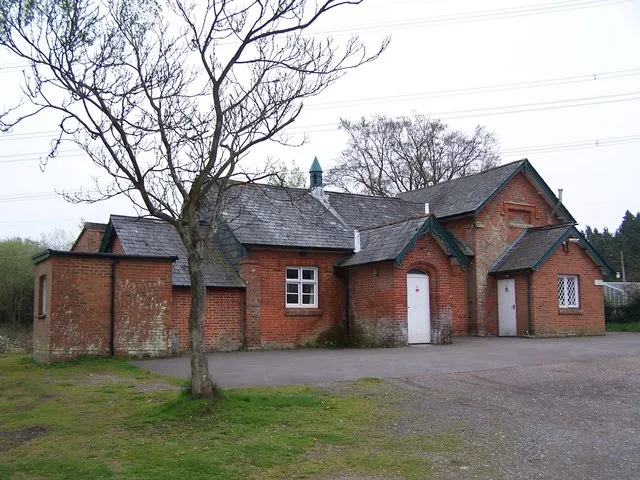
But most of the gigs we write about on this site are not arenas. They are Methodist halls, rugby club function rooms, converted barns and the back rooms of pubs that have been quietly hosting live music since before anyone thought to call it a sector. And in a room that holds 120 people, the arena setting does something specific and unwelcome: it separates the band from the audience.
You know the sound. Kick drum like a door slamming in another building. Vocal fighting the snare. A front row being hit in the chest by a wedge while the back row hears a mush. Everyone leaves saying it was loud. Nobody says it was good.
What a talking room actually is
Here's a thing that took me years to understand: the chatter in a country night isn't a failure of attention. It's the texture of a room where people have come to be together. They're not at a concert, they're at a gathering that happens to have a concert in it.
An engineer in Sheffield put it better than I can. "I mix for the front row to hear the words and the back row to hear the bar," she said. "If those two things are happening at once, I've done my job. If the bar has gone quiet, I've overdone it."
That sentence has been rattling around my head for months. It's a whole philosophy of live sound in one line. It says the music is not in competition with the evening. It says the audience is a part of the mix, not a problem to be overcome.
The engineers who ride the fader
The unsung heroes here are the people who spend the whole night nudging. Down a touch for the chorus so the singer doesn't have to shout. Up a touch for the quiet song so the room leans in. Down again when the band kicks in and forty people turn to each other to say something. They're not setting a level and walking away. They're mixing a conversation.
I've watched this happen at a Tuesday-night showcase in a hall with a sticky floor and a single column PA, and I've watched it happen at a ticketed weekenders where the sound was genuinely world-class. The common thread is restraint. Nobody on that stage is trying to win a fight with the room.
Bands know it too. Ask any UK Americana act who's played both kinds of night and they'll tell you: the quiet rooms are the ones where you can hear yourself think, and where the audience can hear you do it.
The counter-argument, fairly stated
Let me be fair. There's a case for volume. Some songs need a physical punch. A closing barn-burner at 88 decibels is a different animal from the same song at 96, and the latter can lift a room in a way the former can't. Nobody wants a folk club where a whisper counts as a chorus.
And there's a commercial point: a lot of promoters feel pressure to be loud because loud reads as professional. If the sound is loud, the band must be good. Which is nonsense, but it's persistent nonsense, and it's why half the engineers I spoke to have a story about being asked to turn it up by someone who wasn't in the room for the soundcheck and isn't in the room for the quiet song.
But hold both things at once. You can be loud for ninety seconds and then come back down. The night doesn't have to live at one level. A set that moves is a better set than a set that shouts.
The listening room we're actually building
Here's what I think is really at stake. The UK country and Americana scene is, quietly, building a kind of room that barely exists elsewhere: a room where the lyrics matter, where the song is the point, and where the audience is close enough and comfortable enough to really listen.
That room only works at conversation volume. You can't build intimacy with a wall of sound. You build it by leaving space — space for the story before the song, space for the line that lands, space for the person next to you to lean over and say oh, that's lovely.
So next time you're at a country night and you notice you can hear the bar, don't take it as a failure. Take it as evidence that somebody, at the back, with one finger on a fader, decided the evening mattered more than the decibels. Turn it down. They're talking.