Two Hours Before Doors: The Regulars Who Set a Room's Temperature Before a Note Is Played
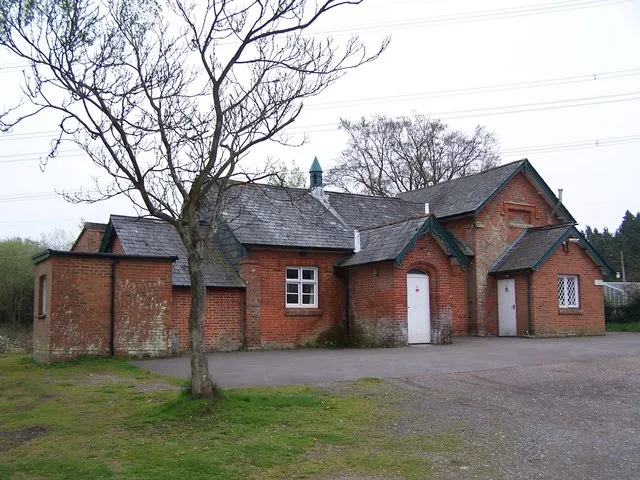
Photo: David Martin, CC BY-SA 2.0, via Wikimedia Commons
Doors are at half seven. Margaret is there at half five.
She has been coming to this club night in a Lincolnshire village for eleven years, since it was in the smaller room with the bad lighting, and she arrives two hours early for reasons she explains with a wave of a hand that suggests the reasons are obvious. Parking. Choosing a seat. Getting the kettle on. "And it's nice to see everybody come in," she adds, as if that settles it.
It does settle it. Because the thing about a country club night is that the gig is only half of it. The other half is the bit that happens before the band arrives, when the room is empty except for the people who have always been there.
The committee of six
Every club has them. The six or seven regulars who turn up before the doors and start arranging things with no instruction and total authority. Chairs in rows, but with a gap on the left because the radiator. Table by the wall for the merch, with the wonky leg turned to the back. The stack of programmes squared up. A note left for the compere about a birthday.
At a club in the Welsh valleys, the arrangement is done by a retired signalman called Ray, who maintains a laminated diagram of the room that has been through four revisions. "It's the same as a railway," he told me, entirely seriously. "Get the points right at the start and the whole thing runs."
He's right. Get the points wrong — chairs too tight, the front row squeezed into a corner with no legroom, the tea station blocking a fire exit — and the night starts grumpy and never fully recovers.
Cushions, flasks and the business of comfort
Then there's the kit. There's more kit at a country club night than at most festivals. Seat cushions, frequently tartan. A folded fleece for the shoulders. Reading glasses, spare pair. A flask, because the bar is sometimes £4.20 for a very average pint and sometimes doesn't do hot drinks at all after nine.
And, at one memorable club in Cumbria, a small hot-water bottle in a knitted cover that its owner, Brenda, brings from October to March and generously passes along the row when somebody's hands get cold.
None of this is sentimental dressing. It's the infrastructure that makes a two-and-a-half-hour night in a draughty hall work for people over seventy — and those people are the ones buying tickets in November when the room is half full and the promoter is watching the weather forecast.
The etiquette nobody wrote down
Here's where it gets subtle. The front-row etiquette of a UK country club is entirely unspoken and enforced with extraordinary precision.
You do not reserve seats with tape. You may, and in fact should, reserve them with a coat and the clear assumption that this is understood. A handbag on a chair means the chair is taken. A programme on a chair means the chair is probably taken. A cushion means the owner has strong views.
You do not, under any circumstance, sit in the second row when the first row is filling, unless you are saving your knees or your hearing, in which case you sit at the end and everyone understands.
You talk to the person next to you. You will hear about their daughter, their caravan, their dog, and the act they saw here in 2019 who were 'actually marvellous'. You will find this happens during the support act and you will be slightly annoyed about it and then, six months later, you'll be doing it yourself.
And when the singer asks if anyone's been here before, the front row will not cheer wildly. They will do a low, knowing murmur, as if to say: we live here, love.
Why the room's temperature is set before seven
A promoter in Norfolk reckons the first two hours determine the whole night. "If the front row's warm when the doors open, everyone coming in feels it," she said. "If there's just a bloke fiddling with a cable and four empty rows, the room feels like it's going to be a struggle, and people behave like it is."
Audiences are enormously suggestible. The room tells them how to be. A room where a seventy-eight-year-old is already in her seat, already chatting to the sound engineer, already laughing at something — that room says: this is a night out, you're welcome, sit down and enjoy it.
I've also seen the opposite. I once watched a gig where the doors opened into complete silence and a bare floor. It was a perfectly good set, well played, and the audience sat through it as though they'd been asked to witness a difficult surgery.
The ones who hold the memory
There's a quieter function to these regulars, and it's the one that genuinely matters. They remember things. They remember that the promoter drove the band to hospital in 2016 when the van broke down. They remember that the girl now playing the Albert Hall once did a four-song set here at fifteen. They remember which song the club always used to close with and they notice, gently, when it's not played.
In a scene built on small rooms and short memories — where a venue closes and a decade goes with it — those people are the archive. Not the websites, not the posters, not the photos. The woman with the tartan cushion, who was there when it started and is here two hours before it starts again.
Margaret, when I ask what she'd say to someone thinking about coming along for the first time, doesn't miss a beat. "Come earlier than you think. Sit near the front. Bring something to sit on and someone to talk to." A pause. "And if you're on your own, sit next to me."
That's the club, really. The rest is just the band.