The Twang Stops Here: Britain's Country Singers Are Keeping Their Own Voices
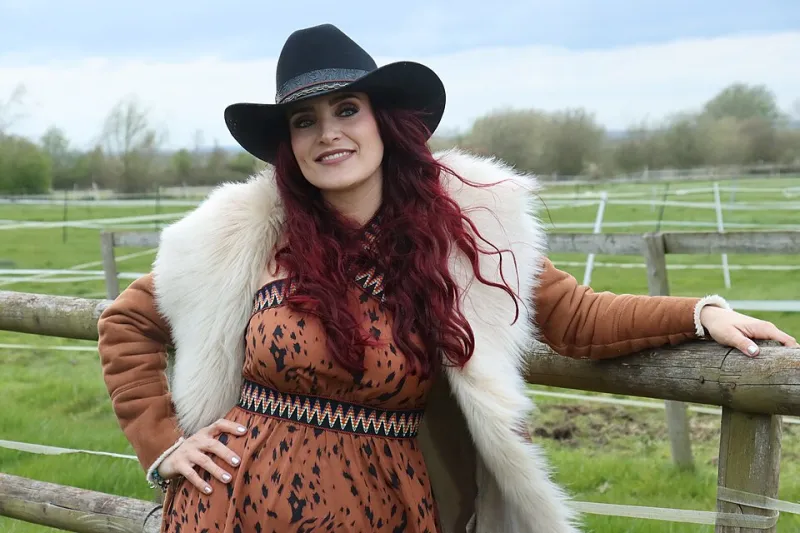
Photo: BeeMusicUK, CC BY-SA 4.0, via Wikimedia Commons
The last time I saw Bethany Ryde play, she introduced a song with a story about her grandma's back kitchen in Barnsley. The room—a converted mill outside Huddersfield—went quiet in that good way. Then she sang the first line in her own accent, flat vowels and all, and the place erupted. Not because it was a novelty. Because it was a relief.
For a long time, UK country singers were quietly encouraged to leave their voices at the door. Not the songs, necessarily, and not the stories. Just the sound of them. The received wisdom was that country music came from America, so the voice should too. Vowels were rounded. Consonants were softened. A Yorkshire 'a' became something closer to a Tennessee 'a', and a Welsh lilt was flattened into something radio-friendly and oddly generic.
In 2026, that wisdom looks increasingly out of date. Across the UK country and Americana scene, artists are singing in the accents they actually have—Glaswegian, Geordie, Cardiff, Norfolk, Belfast—and finding that audiences are not just tolerant of it. They are hungry for it.
The Old Apology
This isn't a new idea, exactly. UK country has always had singers who refused to sand themselves down. But for decades, the commercial path of least resistance ran through Nashville-adjacent pronunciation. If you wanted country radio play, the thinking went, you sang like the records that country radio played. If you wanted a label to take a chance, you made the demo sound like it came from Tennessee, even if it was recorded in a spare room in Sheffield.
That created a strange kind of apology at the heart of the music. Singers would talk about their influences—Dolly, Merle, Emmylou—and then sing as if their own hometown were an inconvenience. The accent was treated as a technical flaw, something to be corrected in the mix.
Marianne Holt, a UK radio plugger who has worked with roots and country acts for more than a decade, says the conversation has shifted. 'Ten years ago, the note I'd get back from programmers was often about polish,' she says. 'Now the note is about personality. They want to know who the artist is. If the voice sounds like everyone else, there's no answer to that question.'
What Changed
Part of it is streaming. Part of it is social media. Part of it is simply that audiences have got used to hearing themselves in the music they love. When an artist posts a phone video from a kitchen in Kilmarnock, the accent isn't a marketing angle. It's the whole point. The gap between the person and the performance closes.
Playlist curators have noticed. Dev Patel runs several UK roots playlists, including one built around what he calls 'voices with postcodes'. He says the old test was whether a song could pass for American. The new test is whether it sounds true.
'Listeners can smell affectation at fifty paces,' he says. 'If a singer is putting on a voice, it doesn't matter how good the song is. Something feels off. But when someone sings in their own accent, even if it's not the accent you grew up with, you believe them. That's what country music is supposed to do.'
The Voices Doing It
You can hear it in the way Bethany Ryde lets a line sit. Her single 'Coal on the Step' is a good example: a slow, sparse arrangement, a story about three generations of a family, and a vocal that never once reaches for a transatlantic twang. The accent does something specific. It makes the place real.
You can hear it in Callum Fraser, a Glasgow singer whose songs are full of rain, buses and the particular melancholy of leaving somewhere you love. Fraser's voice is not pretty in the conventional Nashville sense. It's better than that. It's recognisable. When he sings the word 'home', it lands like a door closing.
And you can hear it in Nia Prosser, a Welsh Americana artist whose new record leans into the cadence of the valleys rather than away from it. Prosser has talked about growing up thinking her accent was a barrier. Now she treats it as an instrument—a way of bending a melody, holding a vowel, making a phrase feel like a question that doesn't need an answer.
That's the thing about accent in country music: it's not just decoration. It's rhythm. It's phrasing. It's the difference between a line that scans and a line that breathes. A Yorkshire 'o' can stretch a note. A Welsh lilt can lift a chorus. A Glaswegian consonant can land a punchline. None of that is a gimmick. It's craft.
The Playlist Test
If you want to know how much has changed, look at the playlists. UK country and Americana discovery is no longer a niche corner of the internet. It's a proper scene, with its own stars, its own venues, its own vocabulary. And the best curators are not looking for a British version of Nashville. They're looking for something that could only have come from here.
That doesn't mean American influences are banned. Far from it. The best UK country artists are in conversation with American roots music—Appalachian ballads, Texas swing, Bakersfield twang—while also drawing on the folk traditions of these islands. The accent is part of that conversation. It's not a rejection of the tradition. It's an addition to it.
The Remaining Friction
Not everyone is convinced. There are still radio formats that prefer smooth over specific, still A&R conversations where 'accessibility' is code for 'less regional', still singers who feel pressure to neutralise their vowels for a shot at a bigger audience. The old apology hasn't disappeared. It's just less fashionable.
But the audience response is hard to argue with. At a show in Cardiff earlier this year, Nia Prosser closed with a song sung almost entirely in her own accent, and the room sang the chorus back at her in a dozen different accents of their own. Nobody was checking whether it sounded American. Nobody cared.
That's the shift. The question is no longer 'Can a British accent carry a country song?' It obviously can. The question is why anyone ever thought it couldn't.
The Voice Is the Instrument
Country music has always been about specificity. A town, a road, a kitchen, a job, a person. The more specific it is, the more universal it becomes. An accent is part of that specificity. It tells you where the song comes from. It tells you who is singing it. It tells you that the story is not a costume.
So here's to the Yorkshire vowels, the Welsh lilt, the Glaswegian consonants, the Norfolk drawl, the Belfast cadence. Here's to the singers who are done apologising for how they sound. The accent isn't the thing to fix. It's the thing to listen to.