The Unlock Is the Audition: How Britain's Village Hall Caretakers Quietly Shape the Country Scene
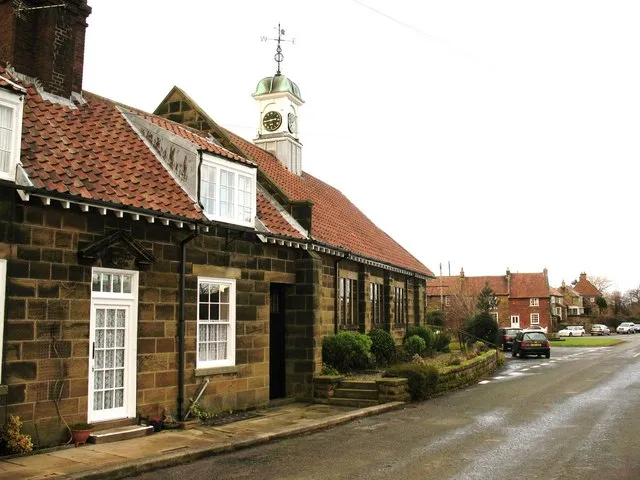
Photo: Gordon Hatton, CC BY-SA 2.0, via Wikimedia Commons
At 5.57pm on a Friday in November, the car park of a village hall somewhere in the Lincolnshire fens holds four hatchbacks, a Transit with a heater that works only on the motorway, and one Volvo that belongs to the person with the key. The band is already there, stamping its feet and peering at a noticeboard about a lost cat. Then the caretaker arrives, a torch in one hand and a ring of keys the size of a small chandelier in the other. The night has not started yet. But it has already been decided.
The Six O'Clock Unlock
There is a moment in every UK country night that never makes the gig listing. It is the turn of the key. The caretaker pushes the door, flicks on the strip lights, and gives the room a quick once-over — not suspicious, just practised. Is the floor dry? Has the piano been moved since Tuesday? Are those the same chairs that were stacked against the wall after the Women's Institute meeting? The band sees a stage. The caretaker sees a building that has to be handed back in the same shape it was lent out.
That first inspection is the real soundcheck. A caretaker will clock whether the drummer has brought a rug for the kit, whether anyone has thought about the trailing lead by the fire exit, whether the singer says hello to the person unlocking the door. It is not about being fussy. It is about the simple bargain of a community hall: you get the room for the night, and the room gets to survive the night.
Stackable Chairs and the Doctrine of Leave No Trace
Ask any promoter on the rural circuit and they will tell you the same thing. The booking committee does not just ask the act how the gig went. It asks the caretaker. And the caretaker's answer is rarely about musicianship. It is about whether the chairs went back on the trolley, whether the bin bags were tied, whether the blue-tack came off the noticeboard.
The rule about nails in the wall is not a joke. It is a philosophy. Village halls are held together by paint, good intentions and the memory of what the wall looked like before the last person hung a banner. A band that turns up with gaffer tape and a plan is already halfway to being invited back. A band that leaves a setlist Blu-Tacked to the fire door is not.
This is the quiet infrastructure of the British country scene. Not the festival main stage. Not the playlist pitch. The person with the key, walking round at 11.15pm, checking that the urn is off and the windows are shut. Their verdict travels. It goes to the parish council, the church warden, the community-centre manager, the promoter who is already thinking about next spring's run of dates. In a scene built on small rooms, that verdict is the real A&R.
The Plug Socket Treaty
Every village hall has one plug socket that matters. Sometimes it is by the stage. Sometimes it is behind the kitchen hatch. Sometimes it is the only socket that has not been claimed by the fridge, the urn and the fairy lights for the Christmas fair. The caretaker knows which one it is. They also know which bands will bring an extension lead and which ones will stand there holding a plug like it is a riddle.
The best acts treat the socket like a shared kitchen. They bring a surge protector. They label their adaptors. They do not trip the whole hall and then act surprised when the clock on the microwave resets. The caretaker notices. They notice everything. And they remember.
There is a warmth in that, too. The same caretaker who says 'no nails in the wall' will often be the one who finds a spare lead from the cupboard under the stairs. They will put the kettle on for the support act. They will tell you where the best chip shop is. They are not gatekeeping for the sake of it. They are protecting a room that has hosted wedding receptions, blood-donor sessions, amateur dramatics and a thousand Friday-night country gigs. They want the night to go well. They just want it to go well without the building paying for it.
The Kettle Is the Green Room
The rider for a village-hall country night is often a trestle table, a plate of biscuits and a kettle that has seen better decades. The caretaker puts it out because they have learned that a warm drink settles a room. The acts that say thank you — that wash up their mugs, that offer the caretaker a cup before the doors open — are the ones who get remembered when the promoter rings on Monday.
This is not glamorous. It is better than glamorous. It is the actual texture of the scene: the urn, the Custard Creams, the caretaker in the fleece who knows where the spare toilet roll lives. The green room is not a room. It is a willingness to share the kitchen.
The Ledger in Their Head
Caretakers keep a mental ledger. Not written down, usually. Just a running note of who left it tidy, who stacked the chairs, who said goodbye to the person on the door, who played past eleven when the neighbours had already been patient. That ledger is the scene's informal reputation system. It is more powerful than a five-star review, because it is local, personal and passed on by people who have been lending out the same hall for thirty years.
A band can be brilliant and still not be asked back. A band can be average and become a fixture, because they understand the deal. The caretaker is not judging the songs. They are judging the care. And in a scene that runs on borrowed rooms and volunteer time, care is the currency that keeps the lights on.
What the Verdict Tells Us
The future of UK country music is not only decided at festivals or in London showcase rooms. It is decided in the six o'clock unlock, the chair stack and the one plug socket everyone fights over. The caretaker's nod is a small thing. It is also the whole thing. It says: this act can be trusted with the room. This night can happen again.
So next time you play a village hall, find the person with the key. Thank them. Stack a chair. Wash up your mug. They are the reason the night happened at all — and the reason it might happen again next year.